The Dow Jones Industrial Average just clocked in its 13th consecutive days of gains, the longest stretch since 1987.
*** Stocks highlighted are for information purposes only and should not be considered as advice to purchase or to sell mentioned securities. As always, the use of technical and fundamental analysis is encouraged in order to fine tune entry and exit points to average seasonal trends.
Stocks Entering Period of Seasonal Strength Today:
Subscribers – Click on the relevant link to view the full profile. Not a subscriber? Signup here.


Super Simple Seasonal Portfolio
This content is exclusive to subscribers of EquityClock.com. Please Log In or Subscribe to proceed.
The Markets
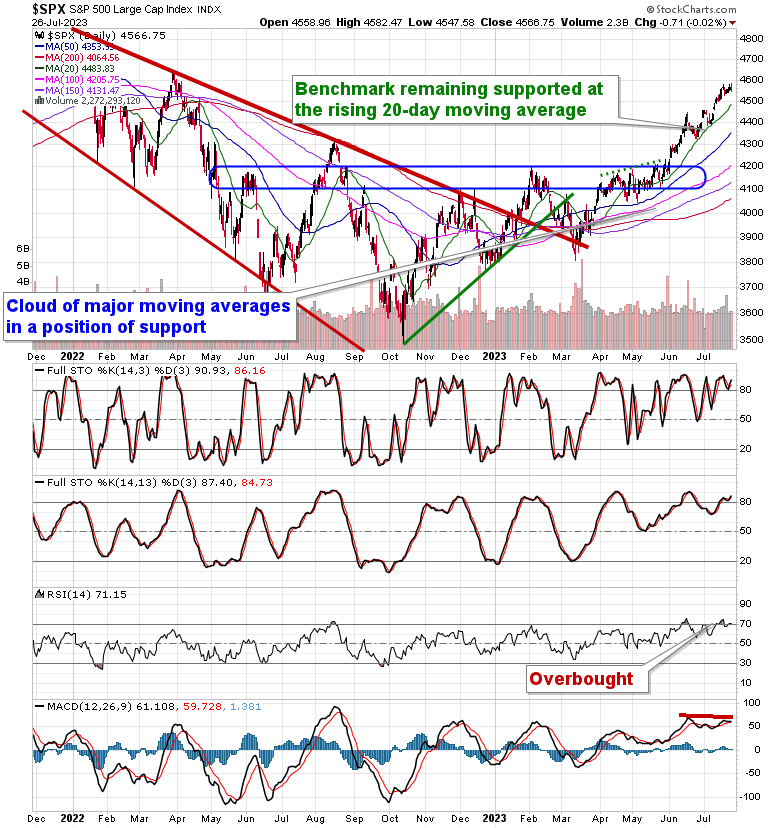
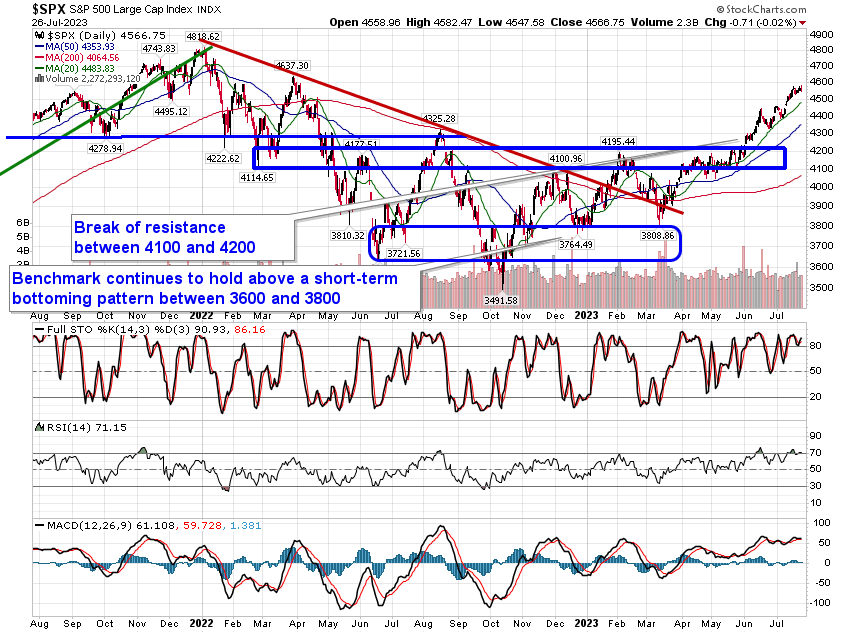
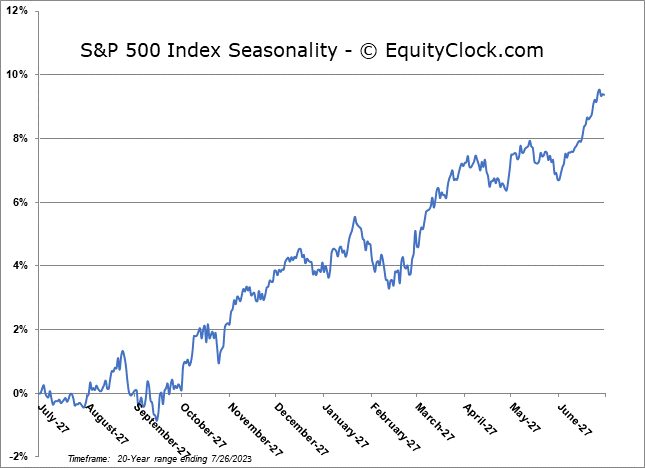
Stocks closed mixed on Wednesday as investors continue to react to earnings that, so far, are failing to provide the next upside catalyst that investors have been searching for to continue the rally. The S&P 500 Index was little changed, down by a mere two basis points (0.02%) and remaining just below the 52-week high charted in recent days around 4580. The daily candlesticks continue to show a reluctance of investors to accumulate further risk exposure at these heights and a point of horizontal resistance is being pegged around 4600. The intermediate path remains that of higher-highs and higher-lows, supported by rising moving averages, but a near-term check-back of these rising hurdles appears warranted, coinciding with the period of volatility for stocks in August and September. The direction of MACD continues to diverge from the path of price, an indication of near-term waning buying demand. The month of July is quickly coming to an end and, along with it, the positivity for stocks that is normal of this mid-year period. Seasonal tendencies are about to become much more difficult for the equity market through the months ahead as the period of normal volatility begins.
This content is exclusive to subscribers of EquityClock.com. Please Log In or Subscribe to proceed.
Sectors and Industries entering their period of seasonal strength:
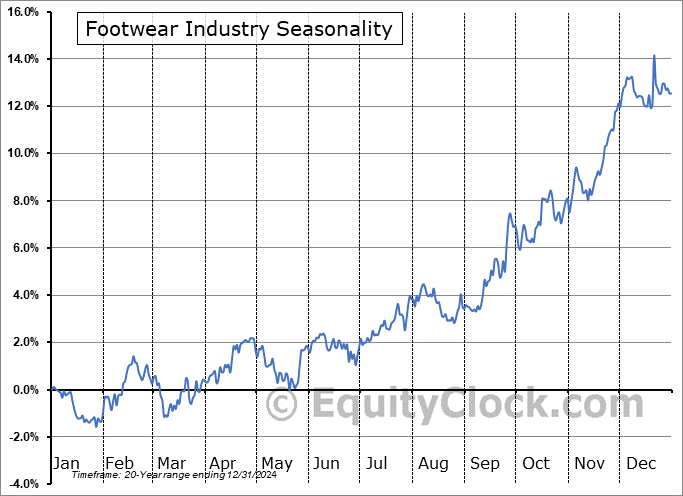
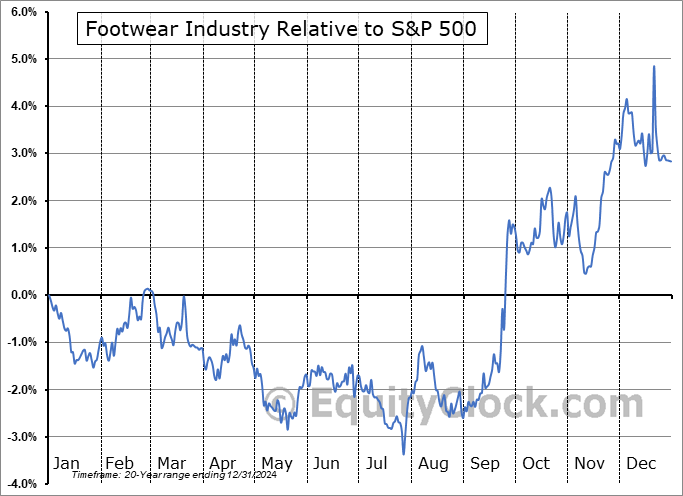
Analysis of the Footwear Industry seasonal charts above shows that a Buy Date of July 27 and a Sell Date of December 23 has resulted in a geometric average return of 6.98% above the benchmark rate of the S&P 500 Total Return Index over the past 20 years. This seasonal timeframe has shown positive results compared to the benchmark in 18 of those periods. This is an excellent rate of success and the return strongly outperforms the relative buy-and-hold performance of the stock over the past 20 years by an average of 2.05% per year.
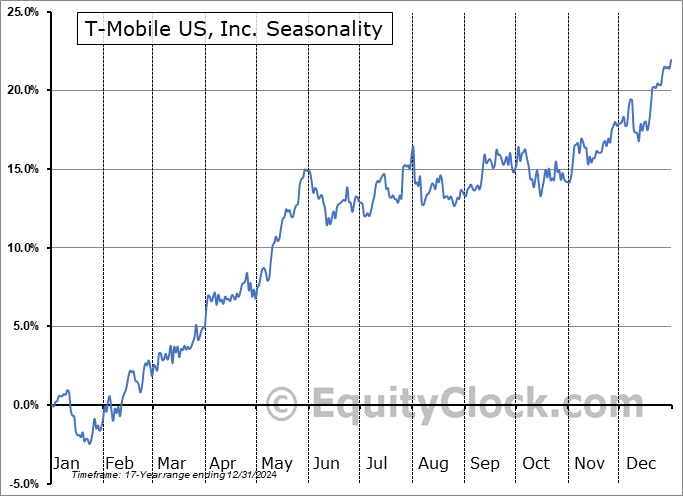
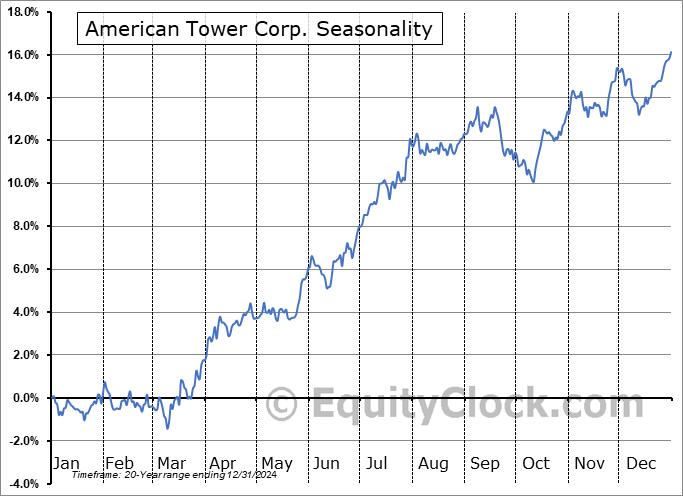
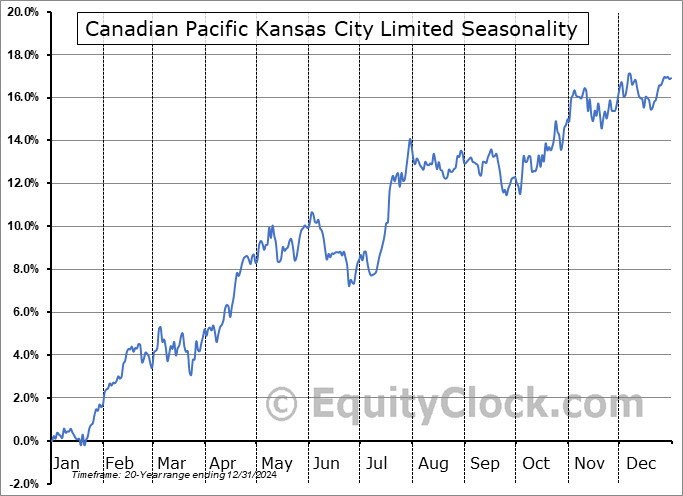
Seasonal charts of companies reporting earnings today:







S&P 500 Index
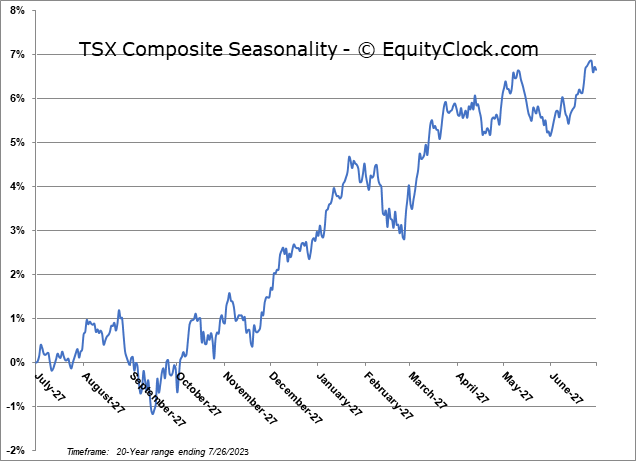
TSE Composite